

Loving and hating writing is nearly a universal experience. Yet we’re made to believe that writers are these tortured geniuses who write beautiful prose and are so in tune with their craft that the act of putting words on a blank page is almost sacred.
So, you open your manuscript excited about your story and all the ideas that have been brewing all day in your head. But two hours later, you close the doc feeling a little defeated by a word count not met or a vision not realized.
And you’re expected to do this again tomorrow? It’s no surprise you start dreading the act itself.
If you’ve ever felt guilty about being a writer who hates writing (even a little), this one is for you.
Table of contents
Why do writers have a love-hate relationship with writing?
Why loving and hating writing isn’t a bad thing and what to do about it.
Author’s note ✍
When I was an SEO writer, there was a period in which I hated writing. The thought of opening a Google Doc and just looking at the outline filled me with anxiety, which in turn made me feel guilty.
Wasn’t I a writer?
Aren’t I supposed to love writing?
Then, why is it so hard to just write a couple of sentences?
I had enough time to do a good job, and still, I procrastinated… constantly. This led me to more than a few sleepless nights trying to meet a deadline and more resentment towards the craft.
Then came the revisions from my editor, which meant more time with a document I didn’t want to see again.
And while, yes, the procrastination part was on me, that period taught me that it’s not that I “hated” writing. It was that I cared too much.
Writing, like any other skill, requires a lot of effort, especially when you’re trying to get better. I wasn’t a bad writer for hating it. I was just doing the hard part (getting better), while expecting there wouldn’t be one.
Why do writers have a love-hate relationship with writing?
Writers love and hate writing because of the gap between what’s in your head and what actually lands on the page.
You have this idea of a vivid world, unforgettable characters, and a story that makes your heart ache. And you see it clearly, because of all that time spent fantasizing about it. But when you actually sit down to write it, you get less-than-ideal results.
This is one of the many reasons why writers like the “idea of writing”.
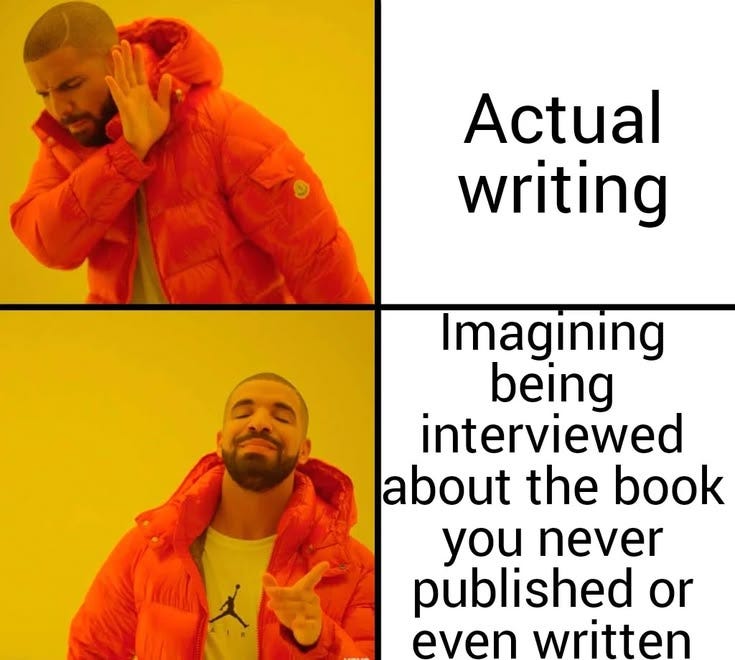
The ideation part is easy. Writers are highly imaginative individuals. Reason why we have more than a couple of projects waiting for us after finishing our current draft.
Now, I’m not saying writing isn’t enjoyable.
Writers love writing because of the act of creating something genuinely theirs.
When writing is “working,” you look up and three hours are gone in an instant. Chasing that flow state is addictive. But even in the days it doesn’t flow, there’s the satisfaction of having done it, which is the feeling behind the popular phrase, often attributed to Dorothy Parker.
I hate writing; I love having written.
Maybe starting is the hard part. But once you’re in it, the resistance quiets and the story carries you.
Writing is thinking. When you write something down, you understand it better. On the blank page fuzzy ideas become beliefs or stories.
But also, writing is genuinely hard. It’s a cognitive effort with a hundred specific rules that, if broken by a single rogue typo, can end your whole career (emotionally, of course, and for 20 minutes).
Writing is demanding and solitary, yet it promises little in return. Other than the satisfaction of having written. And the opportunity of a reader liking what you produced (which is another kind of high).
Why loving and hating writing isn’t a bad thing and what to do about it
Loving and hating writing isn’t a bad thing because it shows you care (maybe too much) about your craft. You want that idea you have in your head to look as good on the page. But maybe your skill hasn’t caught up yet.
And that’s fine.
Refining your craft will be a continuous work-in-progress. You’ll do a good job in book one and book ten as the gap between what’s on the page and your vision keeps getting smaller.
A lot of the resistance, if we’re honest, is ego-driven. Writers are perfectionists by nature, and perfectionism doesn’t like to be caught mid-process. That first ugly (but very important) draft wounds the part of you that wants to be good already. So you avoid it.
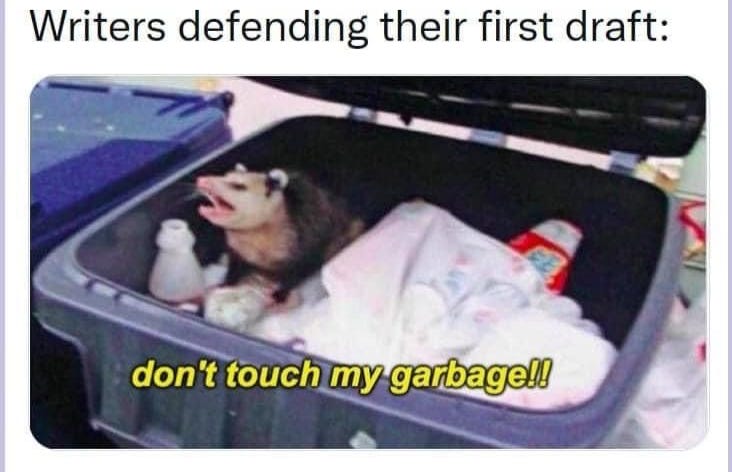
Which brings us to advice as old as the craft itself.
Allow yourself to suck first.
Give your draft permission to just exist. That doesn’t mean it’s bad. A draft zero is doing its job by just existing, and it will always beat a perfect draft that only lives in your head because at least draft zero can be edited. And editing is where the magic happens.
Write something “bad”.
It’s the only way you’ll ever write something good.
And scene
If you made it this far, you’re probably one of those readers who 100% their book. So, thank you for bearing with me until the end :)
If you found this article helpful (either as a writer or a lurker), consider following along as I figure out how to actually write that book.
And if there’s a writing topic you’d like me to write about, drop it in the comments.
What part of writing do you love? And which part makes you want to close your laptop?
Take care and keep writing. ✍️